Faith on Trial: Why No Religion Is Safe Under Victorian Inquiry
This website is intended to inform religious leaders, policymakers, and concerned citizens about the potential unintended consequences of the Victorian Inquiry into Cults and Organised Fringe Groups, and to encourage proportionate, rights-respecting legislation that protects people from real harm without infringing on freedom of belief.
SNAPSHOT
Key Points at a Glance
EVERY FAITH, AT RISK.

“The rights we defend today are the freedoms our children will inherit tomorrow.”

“Harm” is being defined so broadly it could include feelings like guilt or conviction.

Existing laws already protect against assault, fraud, coercion, and deception.

State should not determine what are 'genuine religious practices'
Freedom of belief is a fundamental right under the Human Rights Charter.

Similar laws overseas have led to suppression of mainstream religions.
Important context: This document is not intended to excuse or shield any form of abuse. All acts of coercion, fraud, assault, or harassment are - and must remain - illegal. To safeguard both individuals and liberty, existing laws should be enforced consistently and neutrally, upholding pluralism and human rights for all.
SNAPSHOT
Key Points at a Glance
EVERY FAITH, AT RISK.
“The rights we defend today are the freedoms our children will inherit tomorrow.”
“Harm” is being defined so broadly it could include feelings like guilt or conviction.
Existing laws already protect against assault, fraud, coercion, and deception.
State should not determine what are 'genuine religious practices'
Freedom of belief is a fundamental right under the Human Rights Charter.
Similar laws overseas have led to suppression of mainstream religions.
Important context: This document is not intended to excuse or shield any form of abuse. All acts of coercion, fraud, assault, or harassment are - and must remain - illegal. To safeguard both individuals and liberty, existing laws should be enforced consistently and neutrally, upholding pluralism and human rights for all.
EXECUTIVE SUMMARY
“Protecting the Vulnerable” Shouldn’t Mean Policing Religious Beliefs and Practices
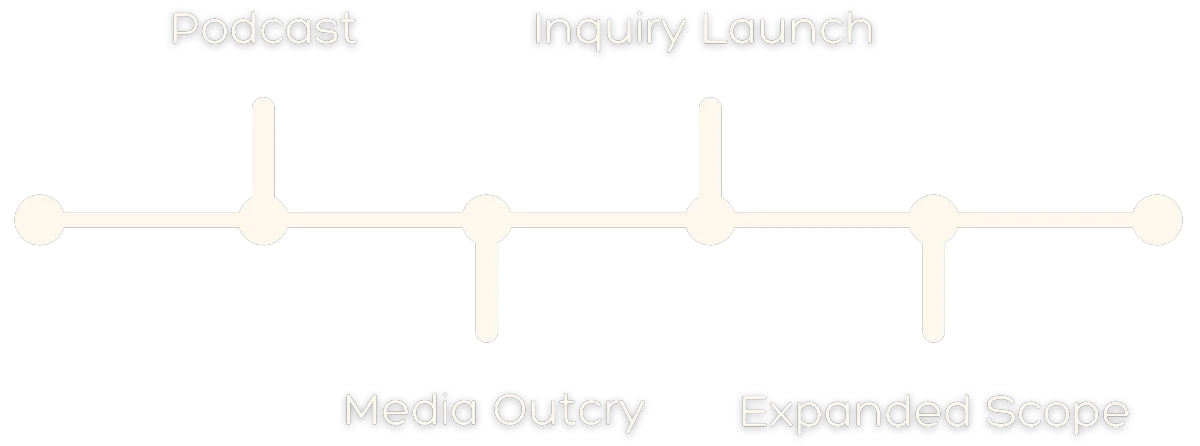
In April 2025, Victoria's Parliament launched an Inquiry into “cults and organised fringe groups” with stated aim to probe coercive control, recruitment and alleged harm.
Though seemingly targeting marginal groups, its vague terms and scope threaten all religions and faith-based organisations in Victoria.
All major religions should take note. The principles being tested here: about belief, conscience and voluntary participation, affect everyone who values freedom of religion.
KEY CONCERNS:
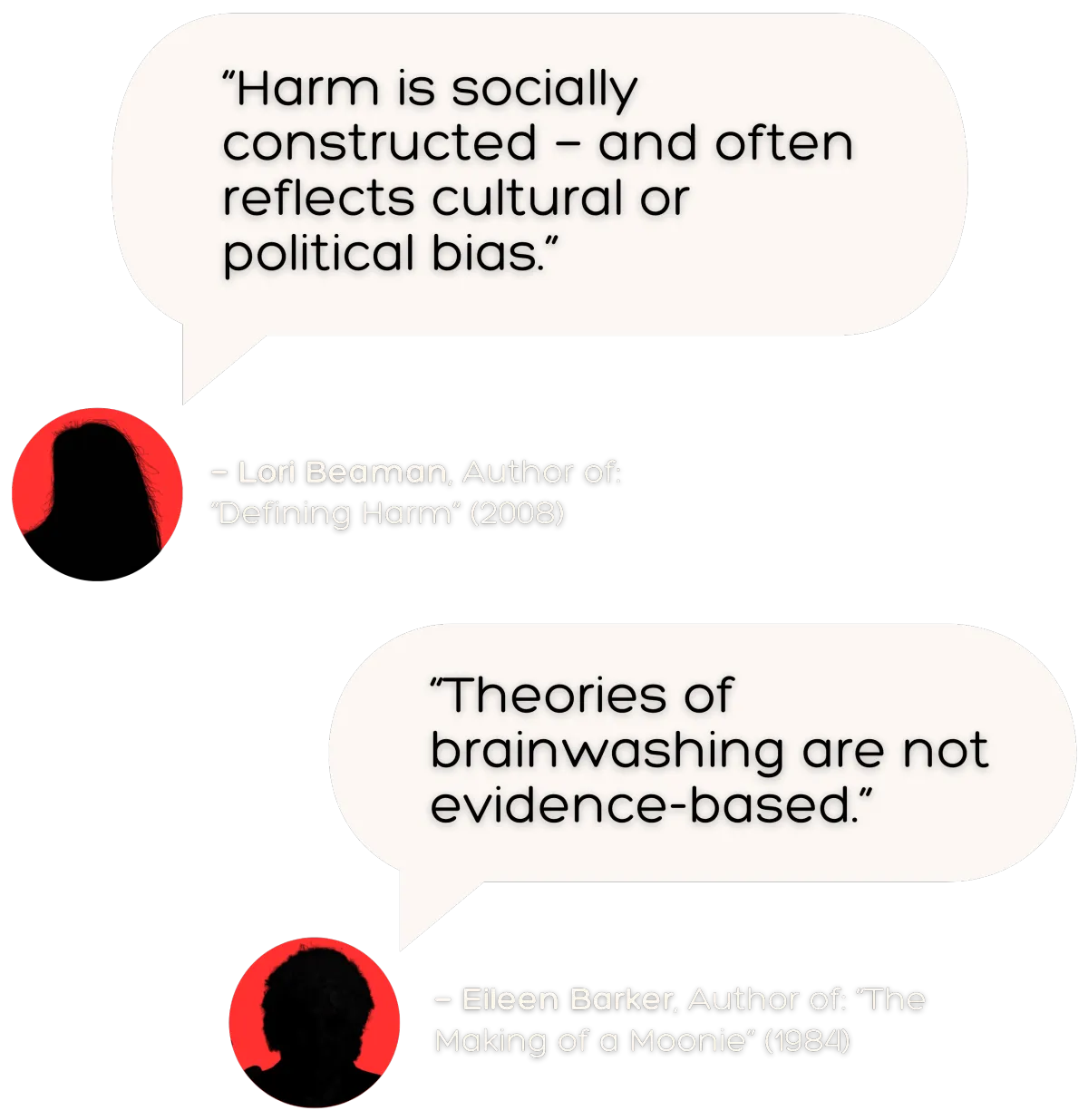
Vague terms like "Coercive control" or "psychological harm" rely on long-discredited theories.
Emotional or psychological “harm” could include feelings of guilt or shame.
Financial “harm” could include voluntary tithing or donations.
Doctrinal “harm” could mean teachings on morality, sexuality, or salvation.
It conflates criminal conduct with doctrinal offence, violating Section 116 of the Constitution and international human rights.
—
Advocacy stems from secularists pushing to end religious charitable status and school instruction.
—
Precedents in China, Russia, and France show how “anti-cult” laws suppress unpopular or minority beliefs.
Existing laws already protect people from coercion, fraud, harassment and other abuses.
Important context: This document is not intended to excuse or shield any form of abuse. All acts of coercion, fraud, assault, or harassment are - and must remain - illegal. To safeguard both individuals and liberty, existing laws should be enforced consistently and neutrally, upholding pluralism and human rights for all.
WHAT THIS INQUIRY IS AND WHY IT MATTERS
FROM 'CULTS' TO CHURCHES: THE EXPANDING SCOPE
Since its launch, the Inquiry's scope has expanded dramatically. Its terms now include emotional, psychological, financial, and doctrinal impacts - concepts that reach far beyond "cults" and into the ordinary religious practices.
Depsite the insitence it’s “not about judging anyone’s beliefs”, the Committee’s Guidance Note distinguishes between “genuine religious practice” and “harmful behaviour” using vague and subjective criteria.
This implies that the State may determine which religious practices are legitimate – a power that directly challenges the religious liberty protections under Section 116 of the Constitution, which prohibits laws that restrict the free exercise of religion.

WHY THIS MATTERS TO ALL FAITHS
When Feelings Become Crimes: The New Meaning of “Harm”
The Inquiry defines “harm” broadly — encompassing emotional, psychological, financial, and physical impacts from “coercive control.” While this may sound protective, the reality is deeply concerning.
Redefining “harm”
Physical
Financial
Psychological
Doctrinal
What It Should Mean
Assault, unlawful imprisonment — already crimes
Fraud or deception
Verifiable trauma from coercion
—
What It Could Mean Under Inquiry
Re-stating existing laws, adding duplication
Voluntary tithes or donations redefined as “exploitation”
Guilt, conviction, or shame from moral teachings
Religious teachings on sexuality or salvation deemed “abusive”
WHY THIS MATTERS TO ALL FAITHS
No Religion Is Immune
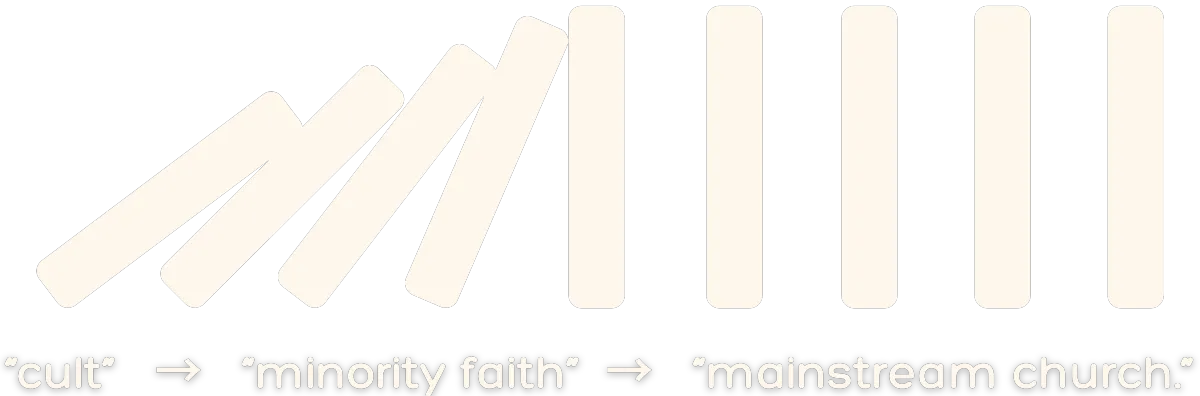
The Inquiry’s language suggests only “cults” are being scrutinised — but history shows that once government power expands, mainstream religions are quickly caught in the net.
Groups with strong moral codes could be accused of “psychological harm.”
Traditional teachings on sexuality or sin could be labelled “coercive.”
Evangelism could be framed as “manipulation.”
Ordinary sermons could become evidence of “doctrinal abuse.”

Even large denominations must recognise that freedom of belief is indivisible: if one group’s rights are weakened, all others will follow.
“your faith is at risk...”
How Broad Is Too Broad?
When ‘Belonging’ Becomes a Crime
The Inquiry lists ordinary acts of Faith as “recruitment tactics”
enquiry GUIDANCE notes:
Offering belonging and purpose: “Appealing to people seeking meaning, identity, or community, often during vulnerable life stages.”
Peer recruitment: “Leveraging social networks to build trust and credibility (friends, colleagues, family members).”
Gradual indoctrination: “Slowly introducing core beliefs and increasing commitment through rituals, group activities, or study sessions.”
Promising transformation or salvation: “Offering exclusive access to truth, enlightenment, or protection from existential threats.”

But the thing is...
Most faiths invite people seeking meaning or community.
Religions naturally grow through friends and families sharing beliefs.
All belief systems teach ideas progressively - through study, reflection, and ritual.
The hope of spiritual renewal lies at the heart of most religions.
If such everyday activities can be called ‘tactics,’ no faith, or even community group, is safe from misinterpretation.
EXISTING LAWS ALREADY COVER THIS
VICTORIA SHOULD NOT BE GIVEN POWER OVER RELIGIOUS LEGITIMACY
The reality is that laws already exist to protect people from harm.
Religious groups are not exempt from these laws. If an individual faith community commits a crime, it is already prosecutable — just like any other person or organisation.
To protect both vulnerable individuals and religious liberty, Victoria must uphold existing legal protections, avoid belief-based offences and maintain State neutrality – the foundation of a free and pluralistic society.

“Religion is not exempt — and never has been.”

existing protections
Type of Harm
Physical assault, threats, imprisonment
Fraud, deception
Misleading or deceptive conduct
Stalking, harassment
Existing Protections
Crimes Act ss. 81–82
Crimes Act 1958 (Vic)
Australian Consumer Law, s.18
Crimes Act, various provisions
EXISTING LAWS ALREADY COVER THIS
VICTORIA SHOULD NOT BE GIVEN POWER OVER RELIGIOUS LEGITIMACY
The reality is that laws already exist to protect people from harm.
Religious groups are not exempt from these laws. If an individual faith community commits a crime, it is already prosecutable — just like any other person or organisation.
To protect both vulnerable individuals and religious liberty, Victoria must uphold existing legal protections, avoid belief-based offences and maintain State neutrality – the foundation of a free and pluralistic society.
“Religion is not exempt — and never has been.”
existing protections
Type of Harm
Physical assault, threats, imprisonment
Fraud, deception
Misleading or deceptive conduct
Stalking, harassment
Existing Protections
Crimes Act ss. 81–82
Crimes Act 1958 (Vic)
Australian Consumer Law, s.18
Crimes Act, various provisions
HUMAN RIGHTS IMPLICATIONS
Freedom of Belief: A Right
That Must Be Protected
Victoria’s Charter of Human Rights and Responsibilities (2006) recognises freedom of thought, conscience, religion, and belief as a fundamental right.
Importantly, under both the Charter and Article 18 of the International Covenant on Civil and Political Rights (ICCPR), this freedom can only be limited if restrictions are necessary, proportionate, and the least restrictive means of protecting the rights of others.
Vague definitions of “psychological harm” or “coercive control” open the door to unjustified restrictions on belief — particularly when existing laws already address actual abuse.
Vague or ideologically biased laws would not meet these standards.
Section 14(1)(a): Protects the absolute right to have or adopt a belief — including changing or rejecting one.
Section 14(1)(b): Protects the right to demonstrate that belief in practice, teaching, or observance, alone or in community.

Necessity → Proportionality → Least Restrictive Means
HUMAN RIGHTS IMPLICATIONS
Freedom of Belief: A Right
That Must Be Protected
Victoria’s Charter of Human Rights and Responsibilities (2006) recognises freedom of thought, conscience, religion, and belief as a fundamental right.
Importantly, under both the Charter and Article 18 of the International Covenant on Civil and Political Rights (ICCPR), this freedom can only be limited if restrictions are necessary, proportionate, and the least restrictive means of protecting the rights of others.
Vague definitions of “psychological harm” or “coercive control” open the door to unjustified restrictions on belief — particularly when existing laws already address actual abuse.
Vague or ideologically biased laws would not meet these standards.
Section 14(1)(a): Protects the absolute right to have or adopt a belief — including changing or rejecting one.
Section 14(1)(b): Protects the right to demonstrate that belief in practice, teaching, or observance, alone or in community.
Necessity → Proportionality → Least Restrictive Means
INTERNATIONAL LESSONS
Around the World, Vague Laws Have Been Used to Suppress Faith
Other countries have passed similar laws — often with unintended, far-reaching consequences. Victoria risks following the same path.
🇫🇷 France – “About-Picard Law” (2001):
Introduced to target “sectarian abuse,” this law has been criticised for stigmatising minority religions and discouraging legitimate religious activity.
🇷🇺 Russia – Extremism Laws (2017):
Framed as counter-terrorism, these laws were used to ban Jehovah’s Witnesses and criminalise peaceful worship.
🇨🇳 China – Anti-Cult Legislation:
Used to suppress Falun Gong and unregistered Christian churches under the guise of “protecting citizens from manipulation.”
These examples illustrate a common pattern: laws introduced to address fringe concerns are quickly applied to mainstream religious practice.
INTERNATIONAL LESSONS
Around the World, Vague Laws Have Been Used to Suppress Faith
Other countries have passed similar laws — often with unintended, far-reaching consequences. Victoria risks following the same path.
🇫🇷 France – “About-Picard Law” (2001):
Introduced to target “sectarian abuse,” this law has been criticised for stigmatising minority religions and discouraging legitimate religious activity.
🇷🇺 Russia – Extremism Laws (2017):
Framed as counter-terrorism, these laws were used to ban Jehovah’s Witnesses and criminalise peaceful worship.
🇨🇳 China – Anti-Cult Legislation:
Used to suppress Falun Gong and unregistered Christian churches under the guise of “protecting citizens from manipulation.”
These examples illustrate a common pattern: laws introduced to address fringe concerns are quickly applied to mainstream religious practice.
WHO ADVOCATED FOR THE INQUIRY?
BROADER AGENDAS — WHAT'S AT STAKE
Advocacy for the Inquiry has largely come from secularist groups and individuals with broader agendas:
Calling for the removal of “advancement of religion” as a charitable purpose and the elimination of religious instruction in schools.
Key advocates of the Inquiry were also key supporters of the Victorian Conversion Practices Act, which ultimately criminalised a religious prayer in specific contexts.
Recommending a system similar to MIVILUDES (the French Interministerial Mission for Vigilance and Action Against Sectarian Aberrations), which has faced international criticism regarding its methods, data transparency, and potential impact on freedom of belief.
WHO ADVOCATED FOR THE INQUIRY?
BROADER AGENDAS — WHAT'S AT STAKE
Advocacy for the Inquiry has largely come from secularist groups and individuals with broader agendas:
Calling for the removal of “advancement of religion” as a charitable purpose and the elimination of religious instruction in schools.
Key advocates of the Inquiry were also key supporters of the Victorian Conversion Practices Act, which ultimately criminalised a religious prayer in specific contexts.
Recommending a system similar to MIVILUDES (the French Interministerial Mission for Vigilance and Action Against Sectarian Aberrations), which has faced international criticism regarding its methods, data transparency, and potential impact on freedom of belief.
WHAT YOU CAN DO
Your Voice Matters — Here’s How to Protect Freedom of Belief
The Inquiry’s outcomes are not yet decided. Lawmakers and committees are still reviewing submissions and recommendations — and public input matters. Here’s how you can help protect fundamental freedoms:
“The rights we defend today are the freedoms our children will inherit tomorrow.”
Contact MPs
Spread Awareness
Make a Submission
Engage With Decision-Makers
Write to or meet with your local MP.
Raise concern about potential state overreach into Church-State separation..
Emphasise that existing laws already protect against abuse.
Mobilise Your Community
Share this brief widely among your friends and anyone who may be interested.
Encourage your community to speak up - diverse voices carry weight.
Contribute to the Process
Make a written submission to the Inquiry with your concerns.
Attend information sessions if available.
WHAT YOU CAN DO
Your Voice Matters — Here’s How to Protect Freedom of Belief
The Inquiry’s outcomes are not yet decided. Lawmakers and committees are still reviewing submissions and recommendations — and public input matters. Here’s how you can help protect fundamental freedoms:
“The rights we defend today are the freedoms our children will inherit tomorrow.”
Contact MPs
Spread Awareness
Make a Submission
Engage With Decision-Makers
Write to or meet with your local MP.
Raise concern about potential state overreach into Church-State separation..
Emphasise that existing laws already protect against abuse.
Mobilise Your Community
Share this brief widely among your friends and anyone who may be interested.
Encourage your community to speak up - diverse voices carry weight.
Contribute to the Process
Make a written submission to the Inquiry with your concerns.
Attend information sessions if available.
We support laws that protect people from real harm. But laws must never criminalise belief, conscience, or voluntary faith. Freedom of religion is not a privilege — it is a cornerstone of democracy.
DOWNLOAD AND SHARE THE FILES
Additional resources
Want to share this information with others? Send the link

Additioonal Files:
Faith On Trial: Fact Sheet
Example File 2
Bullet List 3
DOWNLOAD:
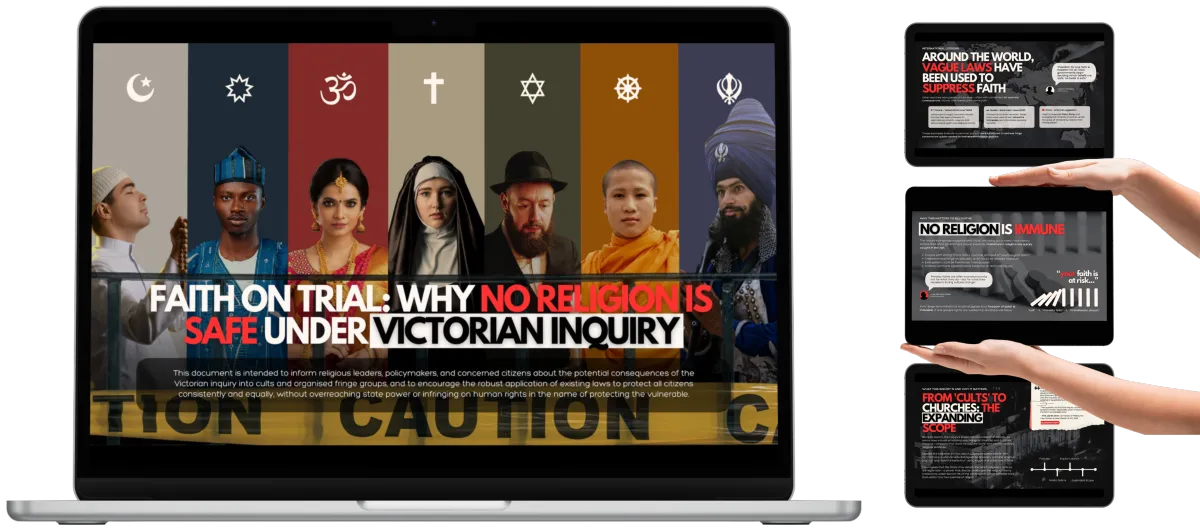
Faith on trial: Why no Religion Is Safe Under Victorian Inquiry
A comprehensive summary of the potential implications from the Victorian Inquiry and how it may affect mainstream religious groups.


DOWNLOAD AND SHARE THE FILES
Additional resources
Want to share this information with others? Send the link
